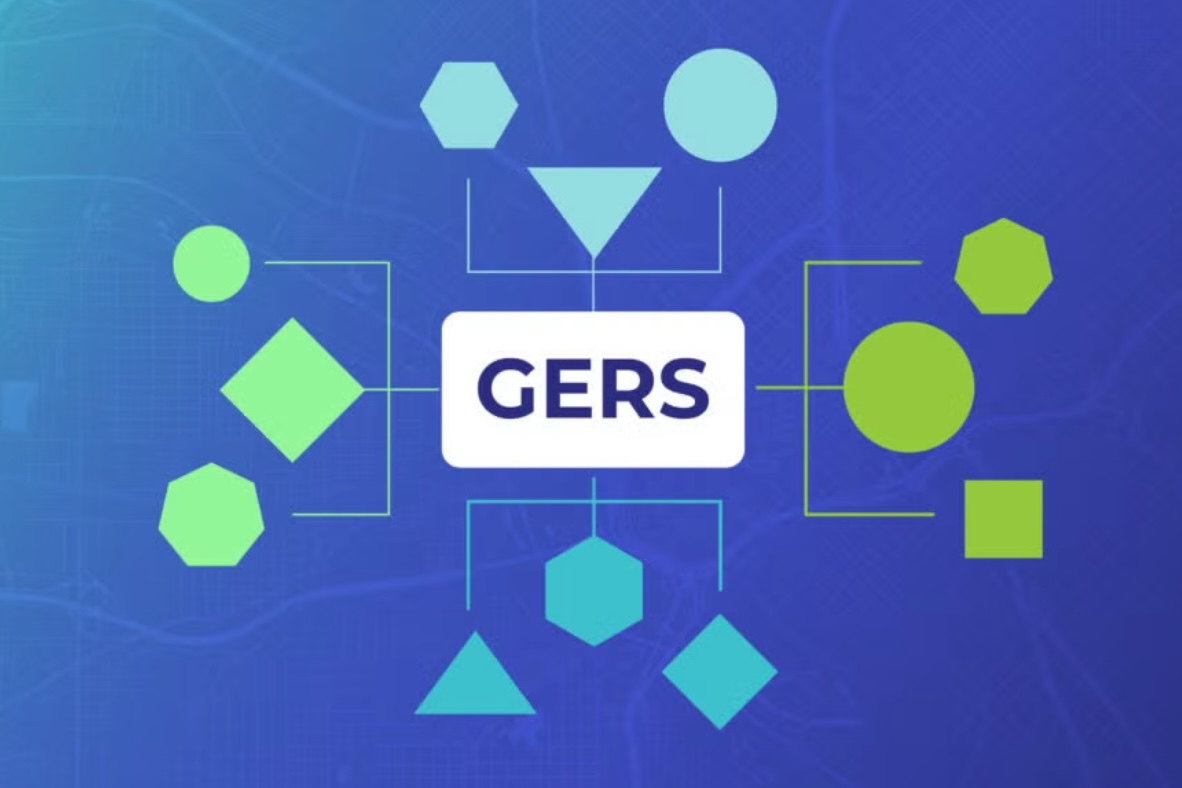
The Open Geospatial Consortium1 is seeking comments on “Justification for the Global Entity Reference System (GERS)2 Framework and Model” as an OGC Community Standard. The GERS Model and Framework (previously) was submitted by the Overture Maps Foundation3. The justification describes the rationale for defining and using a Global Entity Reference System and its suitability for adoption as an OGC Community Standard. The comment period was first announced to end on March 3. However, the GitHub repository for the discussion is still open and at least one comment has been added as late as yesterday (March 4).
The Justification document can be found here (docx). In the OGC repository, there is an interesting comment by the OpenStreetMap Foundation (OSMF)4 that is worth reading, among others. On the OpenStreetMap community forum, there is a broader discussion and debate about OMF and its relationship to OSM and the OSMF. That thread spans a period of more than two years. In light of the OGC GERS discussion, it has seen some recent activity and has also recently been shared in social networks by OSM proponents.
Finally, today Bill Dollins weighed in with an article “The siren song of global identifiers” that draws analogies to similar discussions in the past:
Seen in isolation, this debate might appear unique to geospatial data. In reality, it follows a pattern that has appeared many times in other technical domains. Whenever a global identifier system is proposed, the discussion tends to revolve around the same questions: who governs the identifiers, how neutral the system is, and whether standardization implicitly elevates one implementation over others.
If you only read one thing about the GERS discussion, I recommend Bill’s article. It provides a solid overview of the issues at stake and “zooms out”5 a bit:
Ultimately, I think all three participants in this discussion (OGC, Overture, and OSMF) are correct. Overture is correct that a universal identifier like GERS would be useful. OGC is correct that such a thing should be considered as a standard. OSMF is correct that one identifier to rule them all is not practical. Each is approaching this issue in good faith, without hyperbole and without the “culture war” framing that can sometimes overtake these discussions.
The article goes on and ends on an optimistic note.
Footnotes
Open Geospatial Consortium.↩︎
The Global Entity Reference System by the Overture Maps Foundation (OMF).↩︎
The Overture Maps Foundation is an industry consortium (members include Amazon, Meta, Microsoft, and TomTom) that produces openly-licensed map data, building primarily on OpenStreetMap data.↩︎
The OpenStreetMap Foundation is a non-profit organisation supporting the OpenStreetMap project.↩︎
Often a helpful move.↩︎