Today, the Sentinel-2 earth observation mission1 has three identical satellites in orbit: Sentinel-2A (launched in 2015), Sentinel-2B (launched in 2017; with its Sun-synchronous orbit phased at 180° with respect to Sentinel-2A’s2), and Sentinel-2C (launched in 2024).
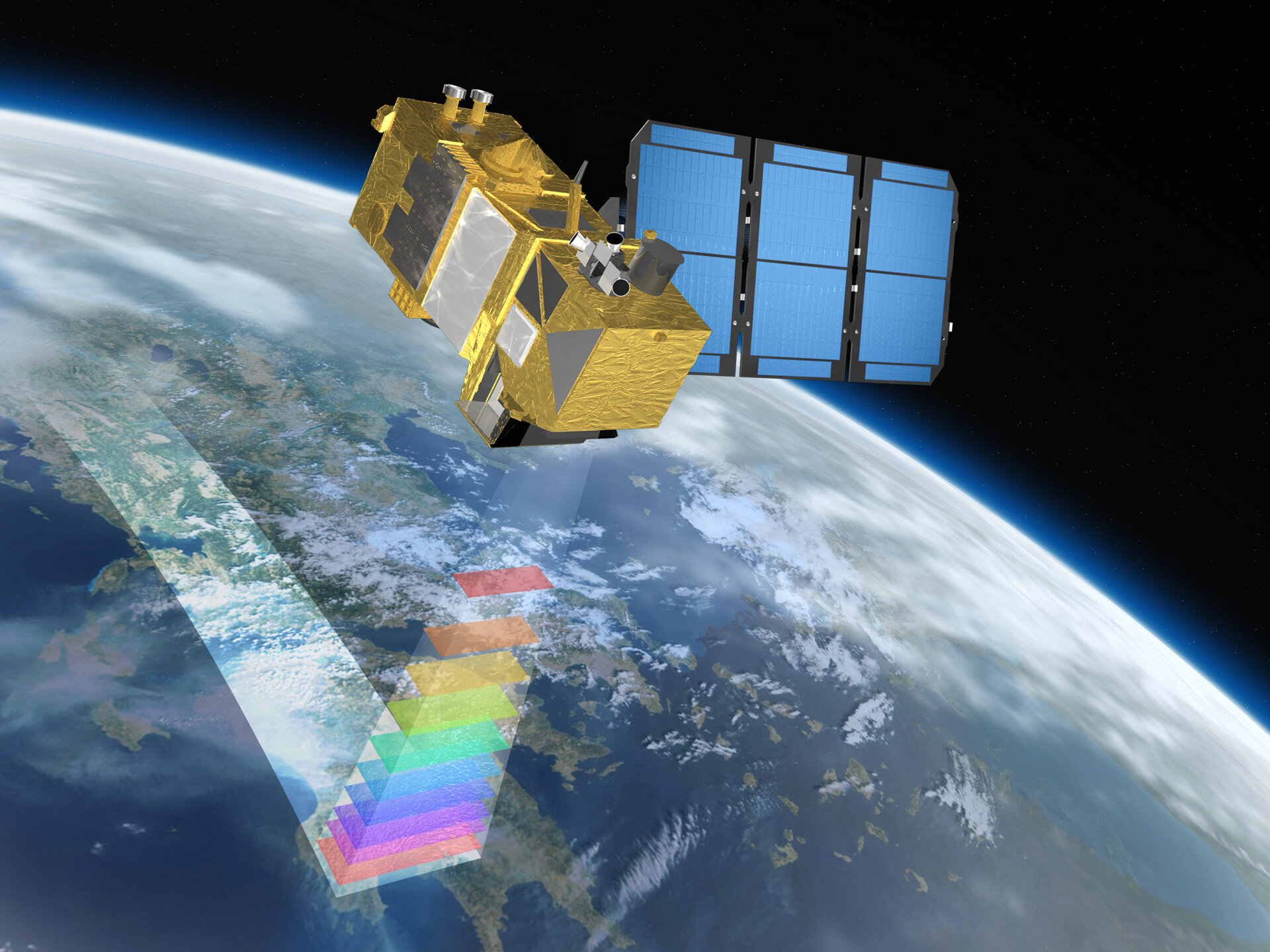
Sentinel-2C is meant to replace 2A, Sentinel-2D (yet to be launched) will eventually replace 2B. Later, the Sentinel-2 Next Generation Mission is planned to ensure Sentinel data continuity beyond 2035.
Now for the really interesting part: Since Sentinel-2C is operational and Sentinel-2A still works, ESA is currently using the latter to explore imaging the Earth at night. From the press release:
(…) the [largely optical] satellites experience darkness during night-time passes. Under normal operations, the imagers are switched off when the satellites passes over night-shrouded parts of the planet. (…) the current generation of Sentinel-2 satellites (…) were never designed to image at night (…).
As Sentinel-2A approaches the end of its operational life, it continues to support the operational Sentinel-2 mission – but, in addition, engineers and scientists are using some of its remaining time in orbit to test new ideas for the future and to prepare for the Next Generation mission. One such experiment has been to see how it would fare when switching it on at night. [And] it did remarkably well.
The results are visually interesting and hopefully valuable for both research and for engineering future Earth observation sensors and platforms.
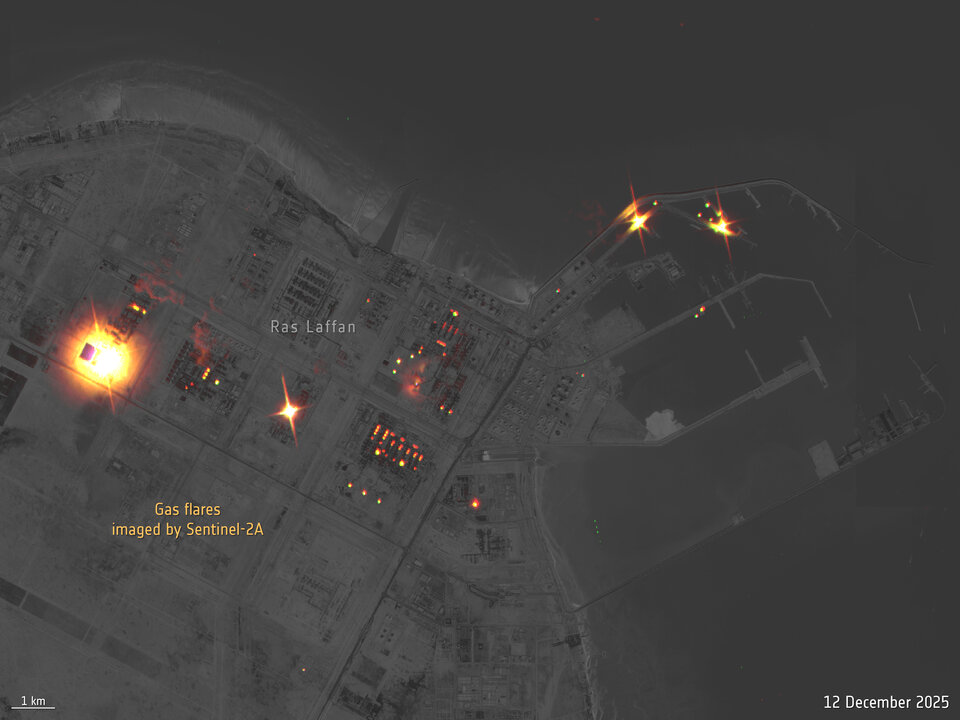

These tests are possible, because Sentinel-2A (like some sibling satellites3) has managed to outlive its planned duration of operation and because, thus, its replacement is already in orbit and operational. At the time of writing, the Sentinel-2A numbers are, per Wikipedia:
Mission duration:
Planned: 7 years
Elapsed: 10 years, 6 months, 23 days
What a great machine. Go 2A!
Footnotes
Sentinel-2 is a satellite remote sensing mission in the European Copernicus Programme.↩︎
This is done to shorten the revisit time (the timespan it takes to capture the same parth of the Earth’s surface again) between the two identical satellites from 10 days to 5 days.↩︎
As an extreme (probably the most extreme?) example, Landsat 5 comes to mind: Launched in 1984, planned operation until 1987, decommissioned in 2013 (!). What feat of engineering!↩︎