In his latest blog post, Mark Litwintschik analyzes 12 (at the time of writing) national boundary datasets (or admin-0 datasets as this kind of data is also known). The data includes, for example: OSM, OMF, GADM, GeoNames, Natural Earth, and USGS.
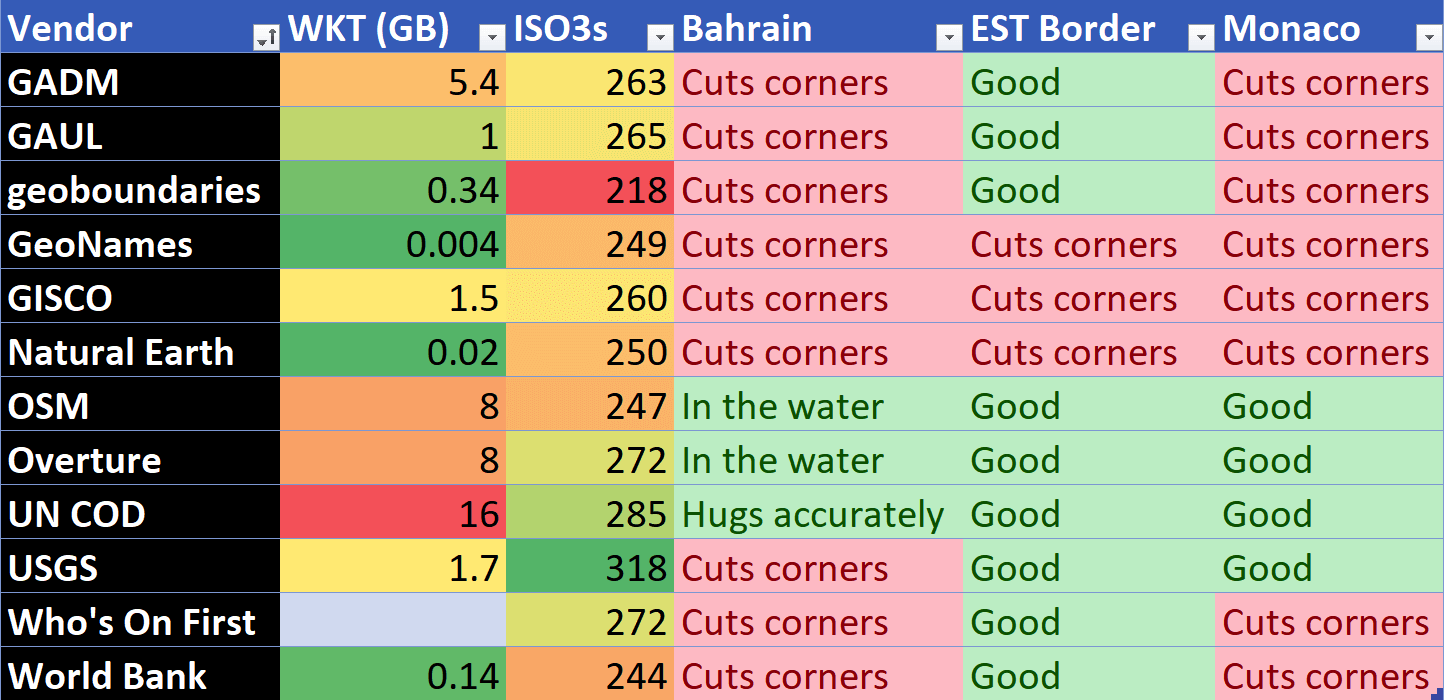
Mark’s comparison looks at:
- geometry – qualitatively, using map excerpts in Bahrain, Estonia, and Monaco
- geometry – quantitatively, by looking at the size of the geometry in WKT1 form
- number of administrative units – specifically, the number of distinct ISO 3166-1 alpha-3 country codes2 in the data is analyzed
Below is Mark’s comparison table (as of today). Mark’s post also shows data excerpts of the various data sources so that one can see the information contained for admin-0 units as well as the code and SQL (in DuckDB) used to analyze the data.
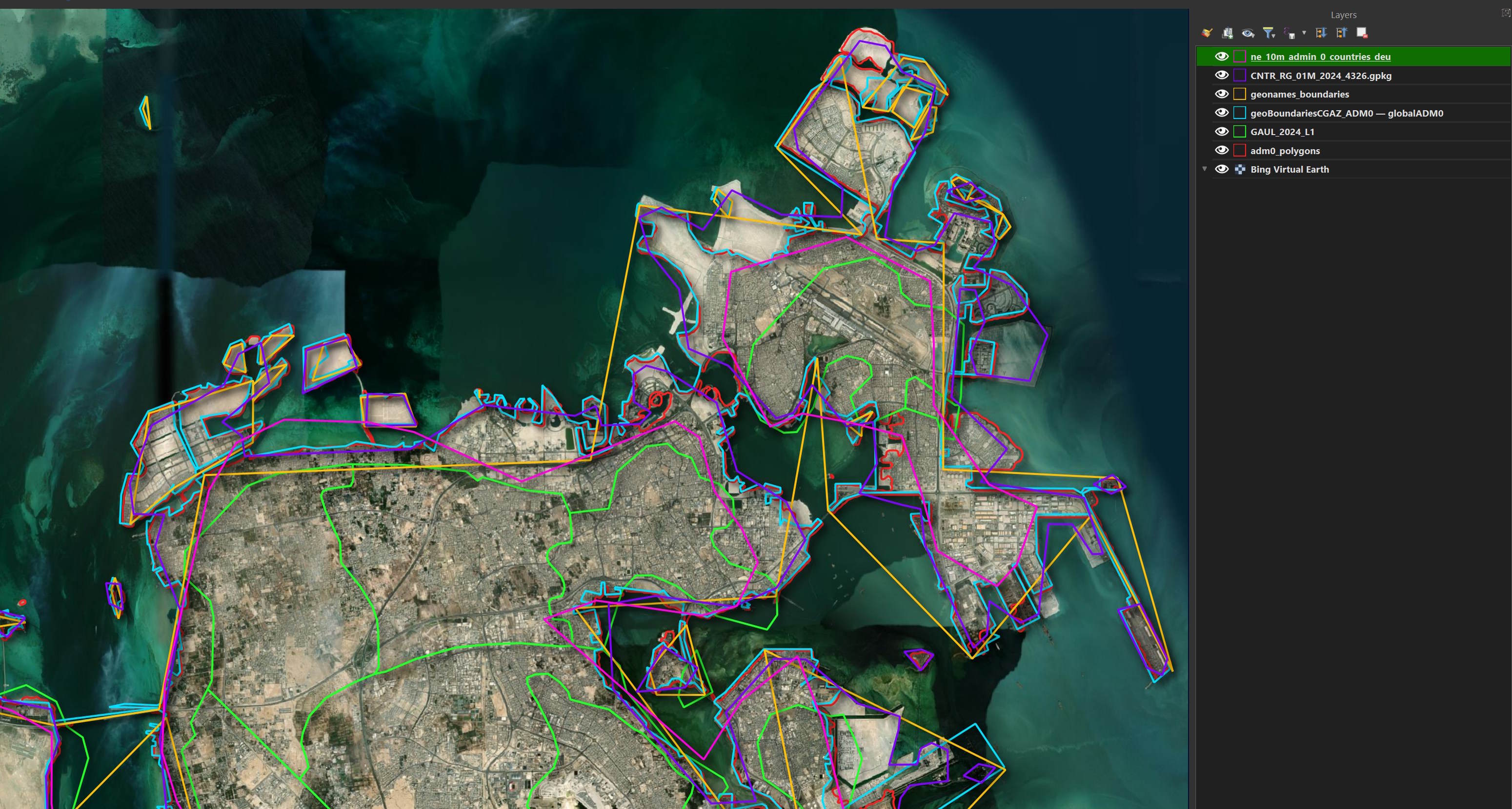
There is a larger number of different sources for this kind of data than I had thought (although I knew some of the sources). And, maybe not so suprisingly, the various datasets differ considerably.
In addition to the blog post, there is an interesting ongoing discussion on LinkedIn.
Footnotes
Well-Known Text, a markup language for representing vector geometries.↩︎
For example,
CHEfor Switzerland,FRAfor France,GBRfor the United Kingdom.↩︎